
Snort
Security Information and Event Mgmt. (SIEM)
Alternative Vendors


Commercial Alternatives


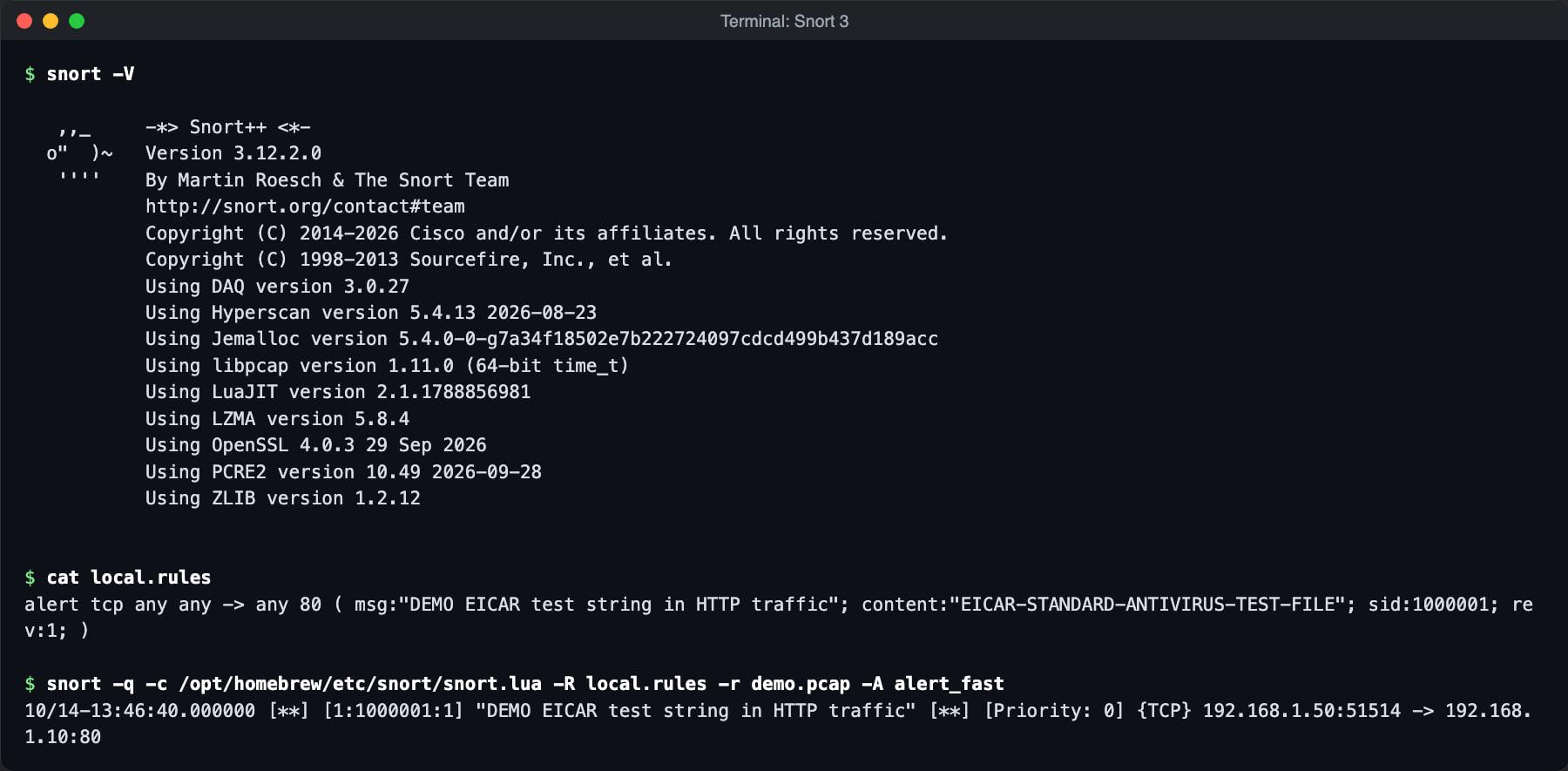
Key Features
OpenAppID
Application-layer detection lets rules identify and control specific applications on the network
Real-time Traffic Analysis
Monitors and analyzes network traffic in real-time to detect suspicious activity and potential threats across IP networks
Rule-based Detection Engine
Flexible rule language that combines signature-based, protocol-based, and anomaly-based detection methods to identify known and emerging threats
Inline Prevention Mode
Can be deployed inline as an IPS to actively block malicious packets and prevent attacks from reaching their targets
Protocol Analysis
Deep packet inspection and protocol analysis across multiple network protocols including HTTP, DNS, FTP, SMTP, and more
Multi-threaded Processing
Snort 3 supports multiple packet processing threads for improved performance on high-traffic networks
Pros and Cons
Pros
Completely Free & Open Source
Free to use with no licensing costs under GPL-2.0, making it accessible for organizations of all sizes
Backed by Cisco Talos
Developed by Cisco Talos, whose researchers write the same rules used in Cisco's commercial firewalls
Highly Customizable
Flexible rule engine allows creation of custom detection patterns and rules tailored to specific environments
Active Community Support
Large global community provides extensive rule sets, documentation, and peer support
Cross-Platform Support
Snort 3 targets Linux and Unix; Windows builds exist for Snort 2.9, and Snort is packaged in pfSense and OPNsense
Cons
Steep Learning Curve
Requires significant expertise in networking and security to configure, tune, and maintain effectively
Manual Rule Management
Free community and registered rules lag behind; release-day rules need a paid subscription, priced per sensor for business use
Resource Intensive
Can consume significant CPU and memory resources on high-traffic networks, requiring proper hardware sizing
Snort 2 to Snort 3 Migration
Talos has retired rules for older Snort 2 versions; moving to Snort 3 means a new configuration format and testing
Limited Built-in Management
No built-in management GUI or multi-tenant console; MSPs rely on a firewall platform or SIEM to manage sensors and alerts
Feature Comparison
Comments
No reviews yet. Be the first to share your experience with Snort.
Frequently Asked Questions
/vendor/snort