
Wazuh
Extended Detection and Response (XDR)
Alternative Vendors

Commercial Alternatives


Key Features
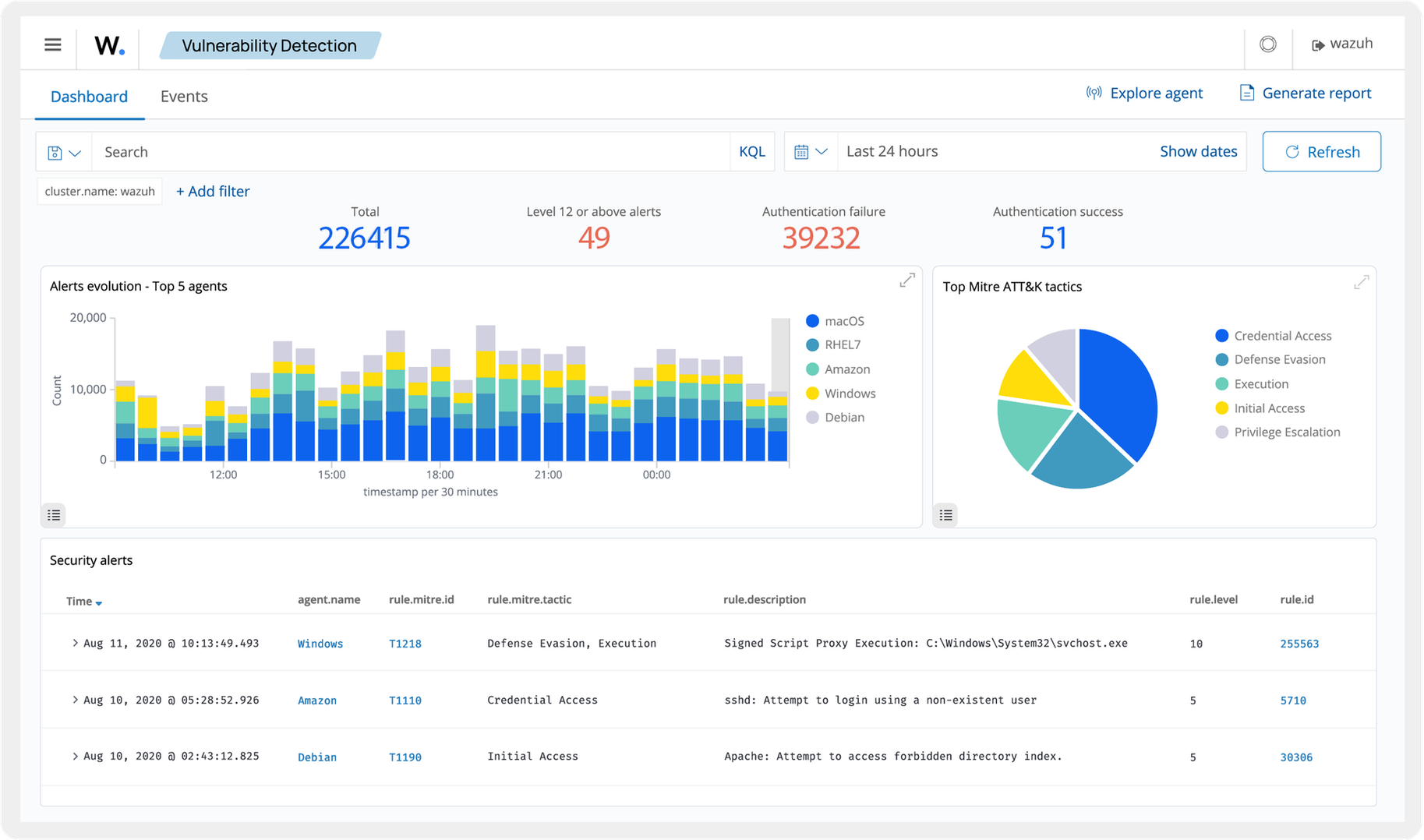
Vulnerability detection
Correlates installed software inventory with vulnerability feeds to list CVEs per endpoint.
Security configuration assessment
Checks systems against CIS-based policies and reports hardening gaps.
Active response
Runs automatic responses such as blocking an IP or stopping a process when a rule fires.
Cloud and container monitoring
Collects security data from AWS, Azure, Google Cloud, Microsoft 365 and Docker.
File Integrity Monitoring
Watches files, registry keys and permissions and alerts on changes, including who made them.
Log analysis and threat detection
Decoders and rules analyse endpoint, network and cloud logs, enrich them with threat intelligence and map alerts to MITRE ATT&CK.
Pros and Cons
Pros
Free Open Source Core
Self-hosted platform is free under GPL v2; Wazuh Cloud is an optional paid hosted service.
Strong Compliance Support
Built-in mapping and dashboards for PCI DSS, GDPR, HIPAA, NIST 800-53 and TSC.
Active Development
Frequent releases on GitHub and a large community forum and Slack.
Scalable Architecture
Server, indexer and dashboard can be clustered to handle thousands of agents.
Comprehensive Security Platform
SIEM, XDR, vulnerability detection, FIM and configuration assessment in one stack.
Cons
Complex Setup and Configuration
Rules and decoders need tuning to reduce noise; deployment and upgrades take real expertise.
Resource Intensive
The indexer and server need substantial CPU, memory and storage as log volume grows.
Documentation Complexity
Extensive feature set can make documentation overwhelming for new users
Limited native multi-tenancy
Separating clients relies on agent groups and dashboard permissions or separate deployments, which adds MSP overhead.
Feature Comparison
Comments
No reviews yet. Be the first to share your experience with Wazuh.
Frequently Asked Questions
/vendor/wazuh