
Sigma
Security Information and Event Mgmt. (SIEM)
Alternative Vendors


Commercial Alternatives


Key Features
Community Rule Repository
More than 3,000 peer-reviewed rules: generic detections, threat hunting, emerging threats and compliance, many mapped to MITRE ATT&CK
Vendor Lock-in Prevention
The same rule can be converted for a different SIEM, so detections are not tied to one vendor
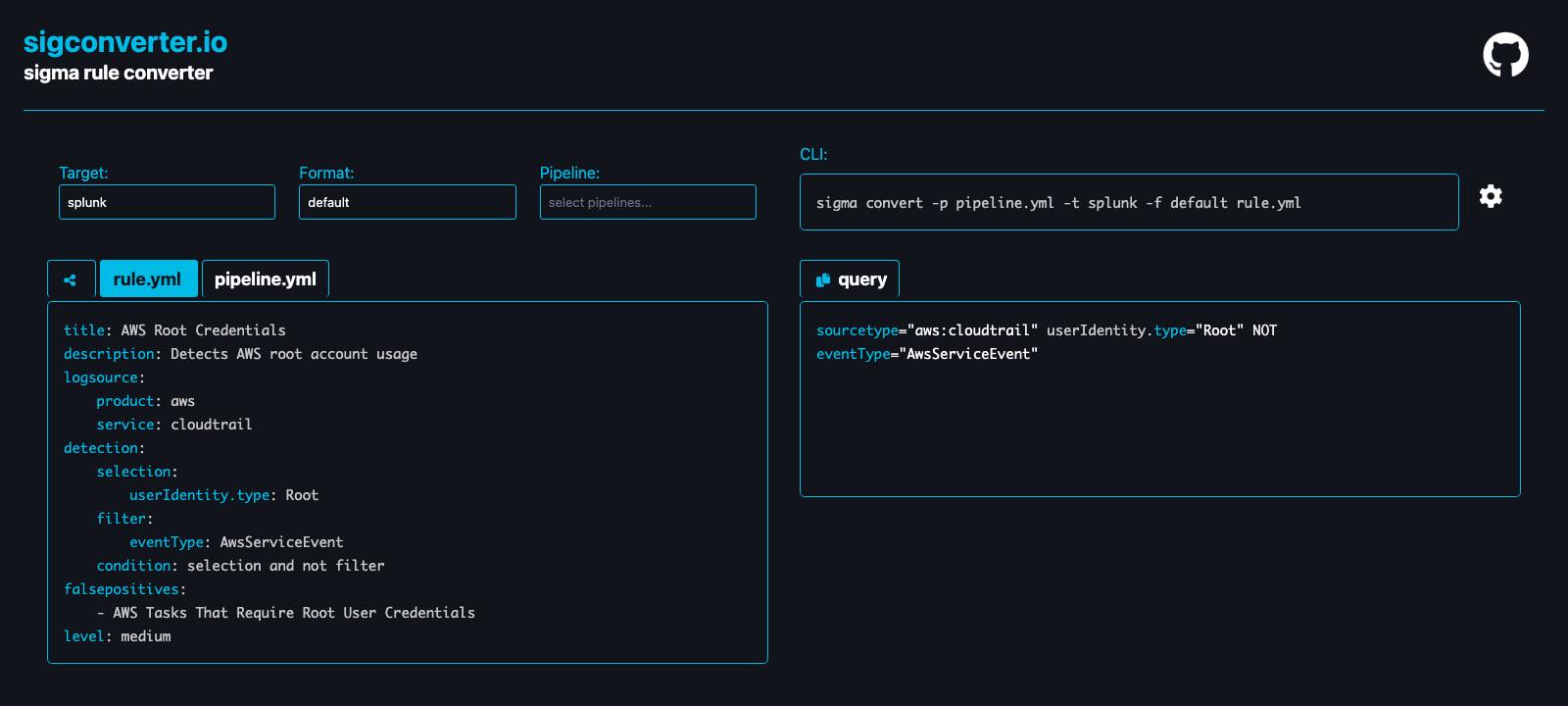
Conversion with pySigma and sigma-cli
pySigma backends and the sigma-cli tool convert rules to platforms such as Splunk, Elasticsearch, Microsoft Sentinel and CrowdStrike; sigmac is deprecated
SIEM-Agnostic Detection Rules
Rules are plain YAML files that describe a log source and match conditions, independent of any SIEM query language
Processing Pipelines
Pipelines map Sigma field names and log sources to the schema used by each platform or customer environment
Regular Rule Releases
Versioned rule packages are published on GitHub on a regular schedule
Pros and Cons
Pros
Platform Independence
SIEM-agnostic format prevents vendor lock-in and enables seamless migration between security platforms
Community-Driven Content
Thousands of peer-reviewed detection rules covering latest threats and MITRE ATT&CK techniques
Industry Standard Format
The format is supported by many SIEM vendors and security tools, and pySigma has backends for the major platforms
Free and Open Source
Rules (DRL 1.1) and tools (LGPL-2.1) are free to use
One Detection Library for Many Customers
MSPs can keep one rule set and convert it for each customer's SIEM
Cons
Limited Native SIEM Features
Cannot leverage advanced SIEM-specific features and may require additional customization
Rule Conversion Complexity
Converted queries often need field mapping pipelines and testing per platform and per customer log schema
Maintenance Overhead
Updating rules across many customer SIEMs needs your own deployment and tuning process
Not a Running Product
Needs a SIEM or log platform to execute the converted rules; there is no console or alerting of its own
Rule License Terms
Rules are under the Detection Rule License 1.1, which requires attribution when rules are redistributed
Feature Comparison
Comments
No reviews yet. Be the first to share your experience with Sigma.
Frequently Asked Questions
/vendor/sigma