
MISP
Security Information and Event Mgmt. (SIEM)
Alternative Vendors


Commercial Alternatives


Key Features
Threat Intelligence Sharing
Share events with partners using distribution levels and sharing groups, and synchronise between MISP instances
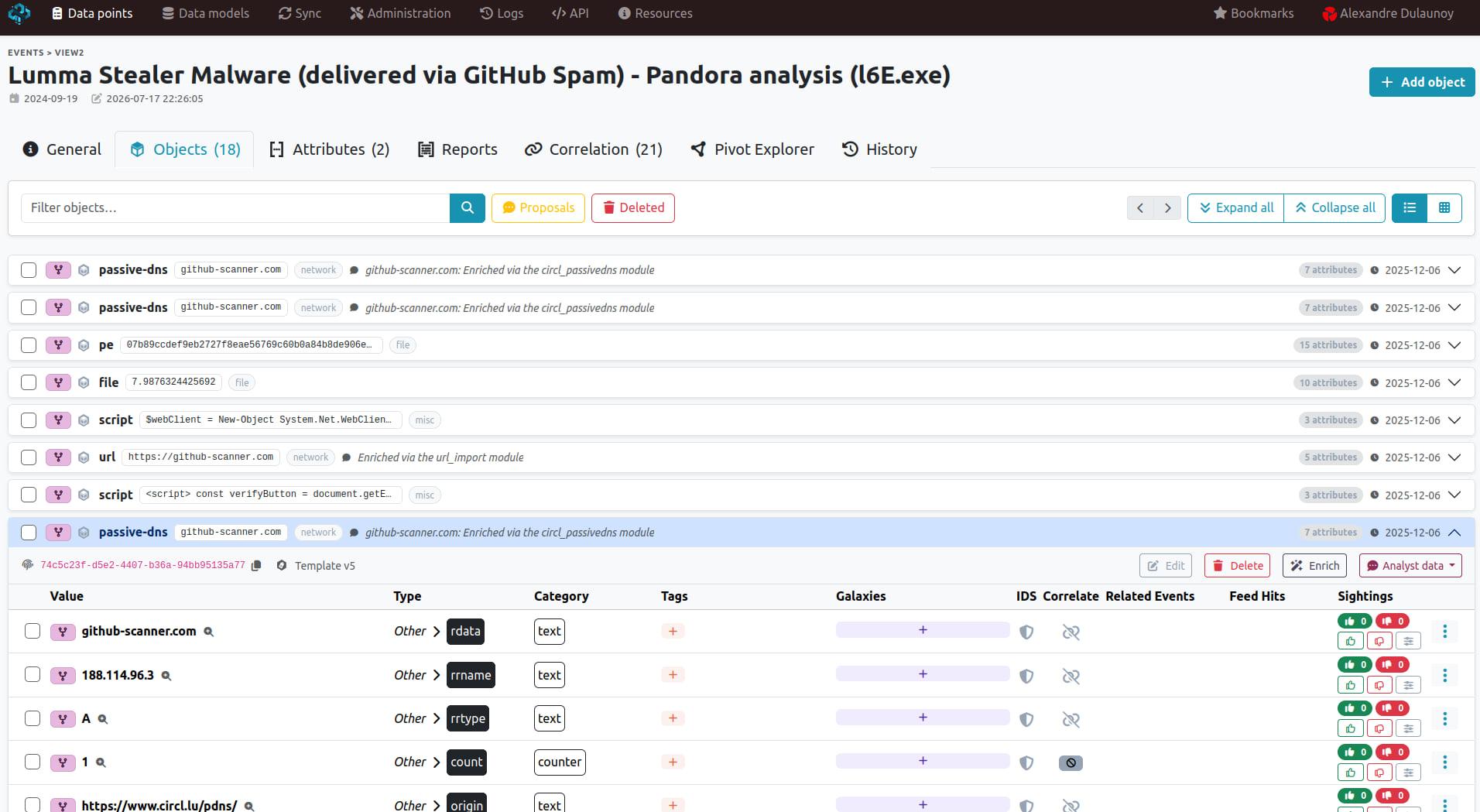
Automatic Correlation
Attributes are correlated against all other events and feeds to reveal links between indicators and incidents
Feeds
Pull public and commercial threat feeds in MISP, CSV or freetext formats and compare them with local data
Taxonomies and Galaxies
Classify data with tagging taxonomies and galaxies such as MITRE ATT&CK, threat actors and malware families
Export Formats
Export to STIX, CSV, Suricata, Snort, Bro/Zeek and other formats for SIEM, IDS and firewall use
Event Graph
Visualise relationships between objects and attributes in an event
Pros and Cons
Pros
Free and open source
AGPL-3.0 licensed with no paid edition or per-seat cost
De facto standard for intel sharing
Widely used by CSIRTs, ISACs and government CERTs, so sharing communities already exist
Fine-grained sharing controls
Distribution levels and sharing groups let an MSSP share selectively with each client
Strong integrations
REST API, PyMISP, modules, and native links to TheHive, OpenCTI and SIEMs
Multiple organisations per instance
One instance can host several organisations with separate users and permissions
Cons
Self-hosting only from the project
There is no official SaaS; hosting and support come from third parties
Steep learning curve
The data model, taxonomies and sharing settings take time to learn and configure well
Operational upkeep
Instances need regular updates, database maintenance and feed tuning
Not a case management tool
MISP stores and shares intelligence; incident handling needs a separate tool such as TheHive
Feature Comparison
Comments
No reviews yet. Be the first to share your experience with MISP.
Frequently Asked Questions
/vendor/misp