
StackStorm
Automation and Scripting
Alternative Vendors


Key Features
Event-Driven Automation
Automate DevOps workflows with sophisticated event-driven architecture and rules engine
Integration Packs and Exchange
Pre-built integration packs shared through StackStorm Exchange, plus custom packs written in Python or shell
ChatOps Integration
Integrate automation with chat platforms such as Slack and Microsoft Teams so teams can run and see actions from chat
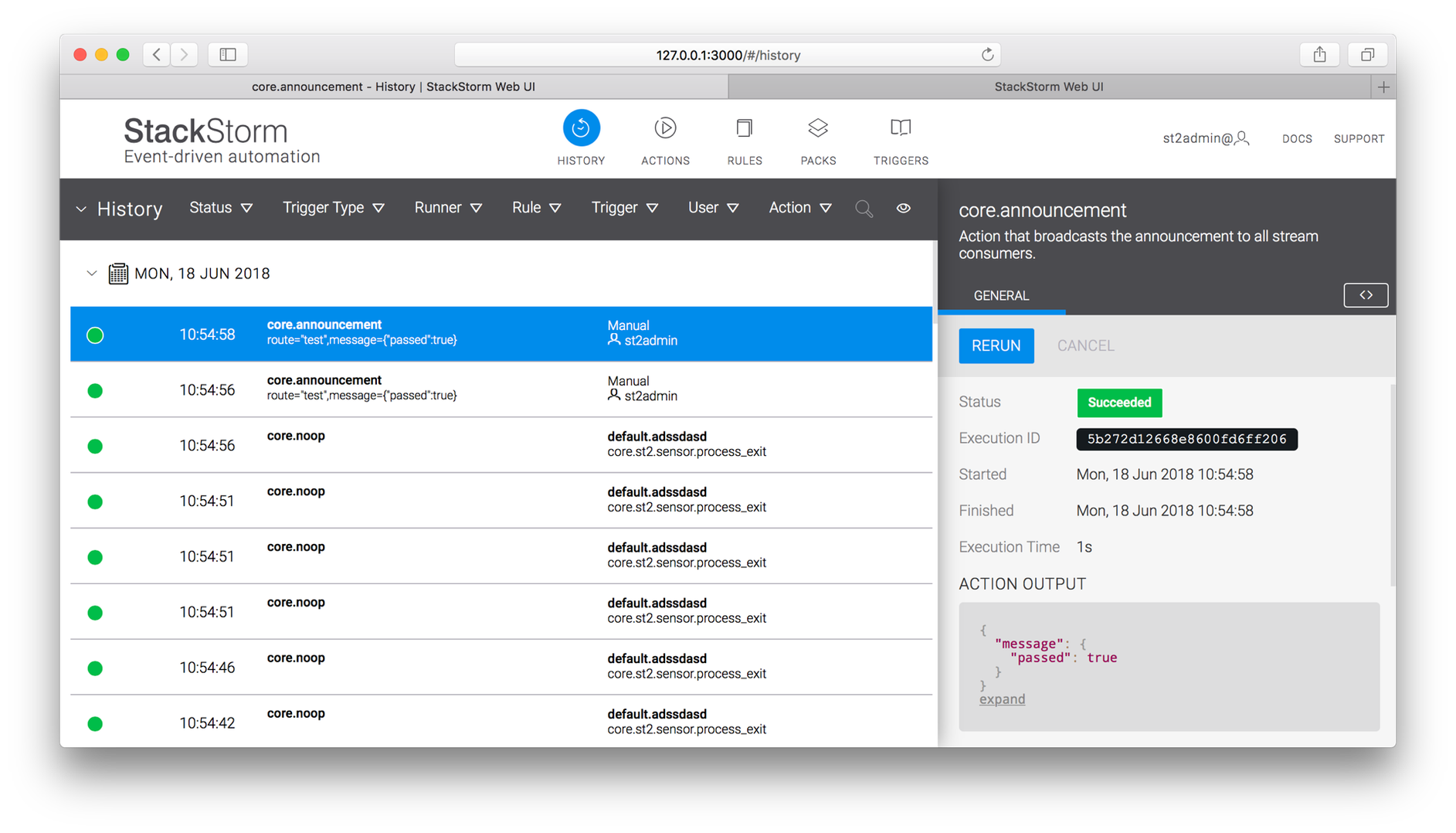
Audit Trail
Every execution is recorded with inputs, outputs, status and who or what triggered it
Advanced Workflow Engine
Orquesta workflow engine for multi-step workflows with conditional logic, loops and parallel branches
Sensors and Rules Engine
Sensors emit triggers from monitoring and other systems, and rules map them to actions for automatic remediation
Pros and Cons
Pros
Proven at Scale
Large organizations have used it in production, including Netflix as the engine of its Winston remediation platform
Extensible Architecture
Highly modular design allows custom integrations and extensions for specific needs
Active Community
Strong open source community with regular updates and community-contributed packs
Free and Permissively Licensed
Apache-2.0 license with no paid edition, so every feature including RBAC is free to self-host
Linux Foundation Governance
Hosted as a Series of LF Projects, which reduces single-vendor risk
Cons
Learning Curve
Complex platform requiring significant time investment to master advanced features
Resource Requirements
Can be resource-intensive for large-scale deployments with many concurrent workflows
No Multi-Tenancy
No built-in tenant separation, so MSPs need separate instances or careful RBAC per customer
Slow Release Cadence
Two years passed between 3.8.1 (December 2023) and 3.9.0 (January 2026)
Linux Only and No SaaS
Runs only on Linux and there is no hosted service; support comes from the community and partners
Feature Comparison
Comments
No reviews yet. Be the first to share your experience with StackStorm.
Frequently Asked Questions
/vendor/stackstorm