Ansible
Automation and Scripting
Alternative Vendors


Key Features
Ansible Galaxy for roles/collections
Community hub for sharing reusable Ansible content including roles, modules, and plugins, accelerating automation development with tested components.
Dynamic inventory support
Automatically discovers infrastructure from cloud providers, virtualization platforms, or CMDBs, eliminating manual inventory maintenance for dynamic environments.
Vault for encrypting secrets
Encrypts sensitive data within playbooks and variables, supporting multiple vault passwords and selective encryption while maintaining playbook readability.
Callback plugins for integrations
Extensible callback system enables custom integrations for logging, notifications, and metrics collection, adapting Ansible to existing operational workflows.
Cross-platform support for diverse environments
Manages Linux, Unix, Windows, network devices, and cloud resources with consistent playbook syntax, enabling unified automation across heterogeneous infrastructure.
Agentless architecture using SSH/WinRM
Manages systems without installing agents, using standard SSH for Linux/Unix and WinRM for Windows, simplifying deployment and reducing security attack surface.
Pros and Cons
Pros
Agentless architecture
Nothing to install on managed hosts; Ansible connects over SSH or WinRM, which keeps customer endpoints clean
YAML-based playbooks
Human-readable YAML syntax for easy learning
Large community
Large community with thousands of modules and roles on Ansible Galaxy
Idempotent operations
Safe to run multiple times with consistent results
Multi-platform support
Works across various operating systems and environments
Cons
No GUI or multi-tenancy in the CLI
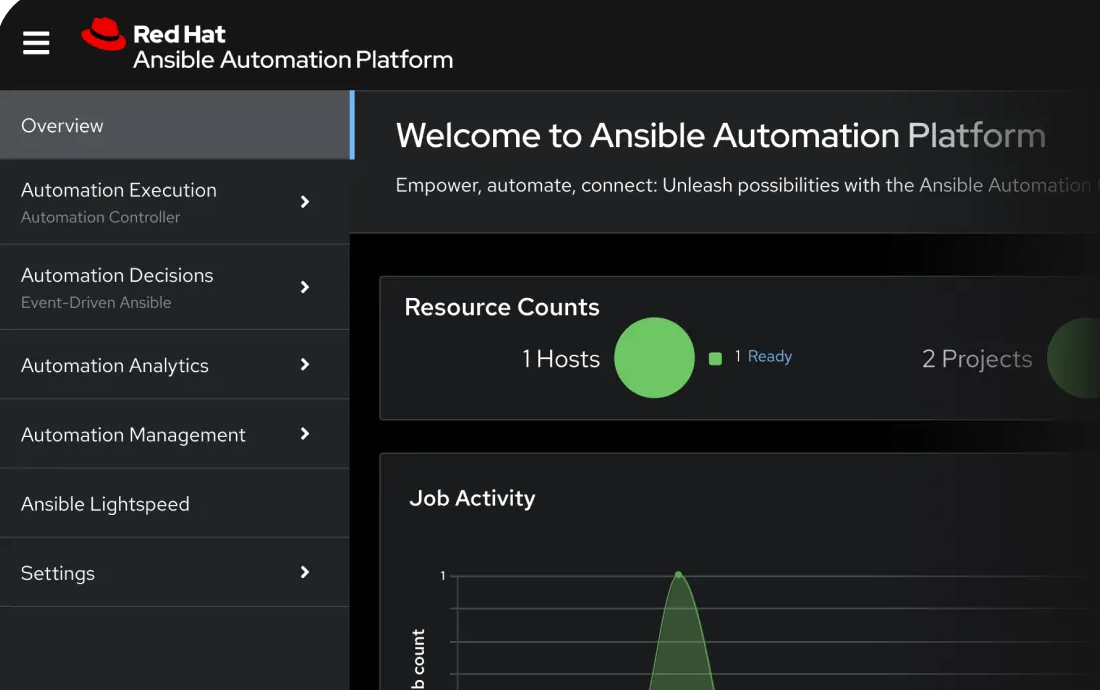
A web UI, scheduling and RBAC require AWX or the paid Ansible Automation Platform; MSPs separate customers through inventories and credentials
Performance limitations
Push model over SSH is slower than agent-based tools when running many tasks across thousands of hosts
Windows needs extra setup
Windows hosts are managed over WinRM or SSH with PowerShell modules, which need more preparation than Linux and the control node itself cannot run on Windows
Debugging playbooks
Errors in long playbooks and Jinja templates can be hard to trace
Scaling challenges
Challenges with very large-scale deployments
Feature Comparison
Comments
No reviews yet. Be the first to share your experience with Ansible.
Frequently Asked Questions
/vendor/ansible-opensource