
Rundeck
Automation and Scripting
Alternative Vendors


Key Features
Runbook Automation
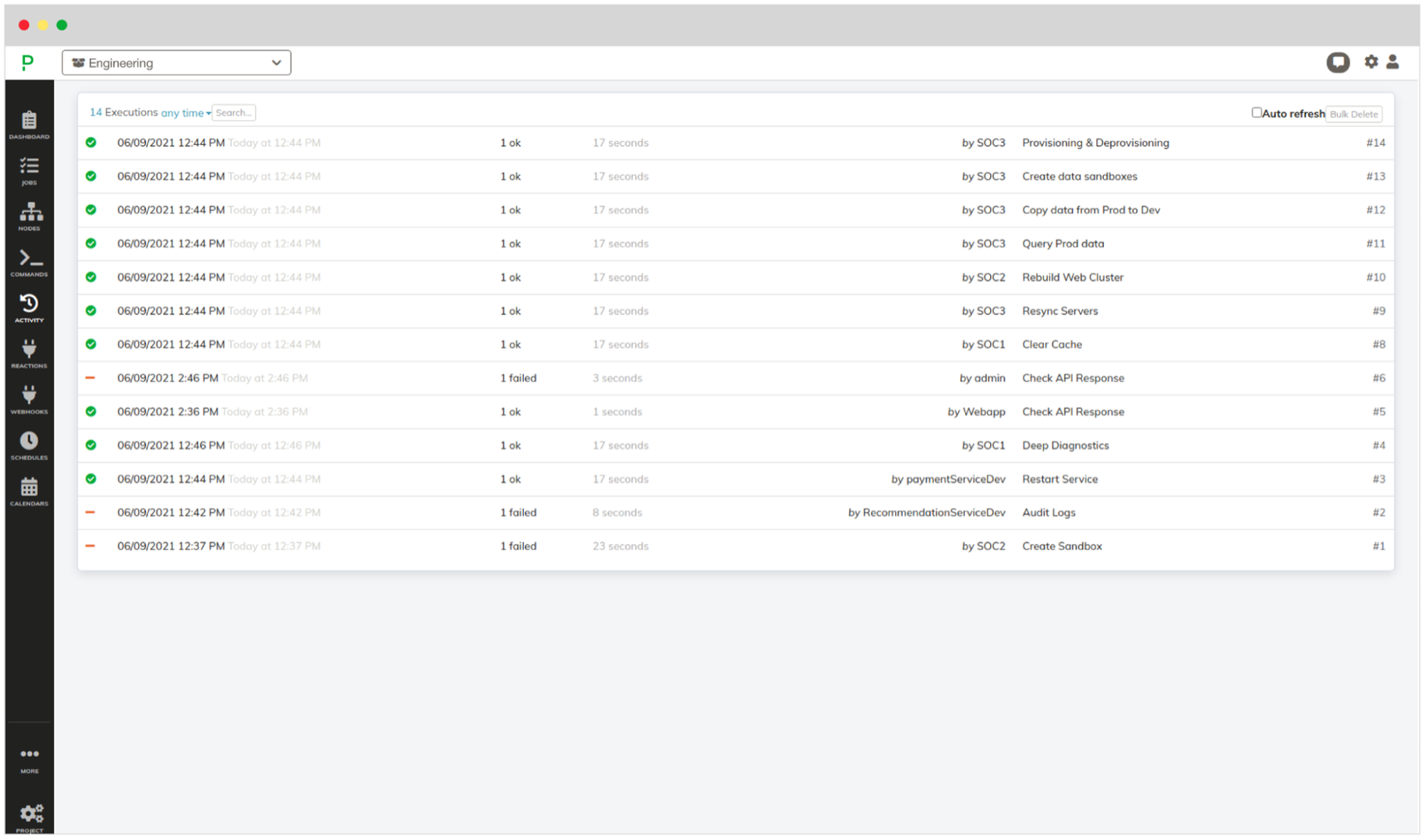
Create and execute automated runbooks for incident response, diagnostics, and remediation with web GUI, CLI, and REST API access.
Self-Service Operations
Safely delegate automation tasks to team members with role-based access control, enabling non-experts to execute complex workflows.
Universal Orchestration
Orchestrate existing automation across Ansible, Puppet, Chef, Jenkins, Docker, Kubernetes, and custom scripts without replacement.
Job Scheduling
Schedule automated workflows with advanced scheduling options, retry logic, and error handling for reliable execution.
Multi-Node Execution
Execute tasks across distributed infrastructure with node filtering, parallel execution, and centralized logging.
PagerDuty Integration
Native PagerDuty integration to trigger runbooks from incidents and alerts
Pros and Cons
Pros
Open Source Core
Apache 2.0 licensed open-source core with no licence cost
Flexible Integration
Works with existing automation tools and scripts without requiring replacement or migration.
Self-Service Automation
Enables safe delegation of tasks to non-experts through role-based access control.
Remote Execution with Runners
Commercial Enterprise Runners securely dispatch jobs into remote environments, useful for reaching client networks from one server
Backed by PagerDuty
Developed by PagerDuty, with deep incident-management integration and a managed SaaS option
Cons
Not Built for MSP Multi-Tenancy
Clients are separated with projects and ACLs; there is no tenant model, PSA or RMM functionality
Learning Curve
Initial setup and configuration can be complex for teams new to runbook automation.
Commercial Pricing Not Public
SSO, high availability, Runners and certified plugins require PagerDuty Runbook Automation, which is quote-based
Self-Hosted Overhead
Open source version requires self-hosting and management of infrastructure.
UI Modernization
User interface could be more modern compared to newer automation platforms.
Feature Comparison
Comments
No reviews yet. Be the first to share your experience with Rundeck.
Frequently Asked Questions
/vendor/rundeck