
Prometheus
Network Management and Monitoring
Alternative Vendors


Commercial Alternatives


Key Features
Multi-Dimensional Data Model
Flexible data model using key-value pairs for identifying time-series data, making it easy to filter and aggregate metrics
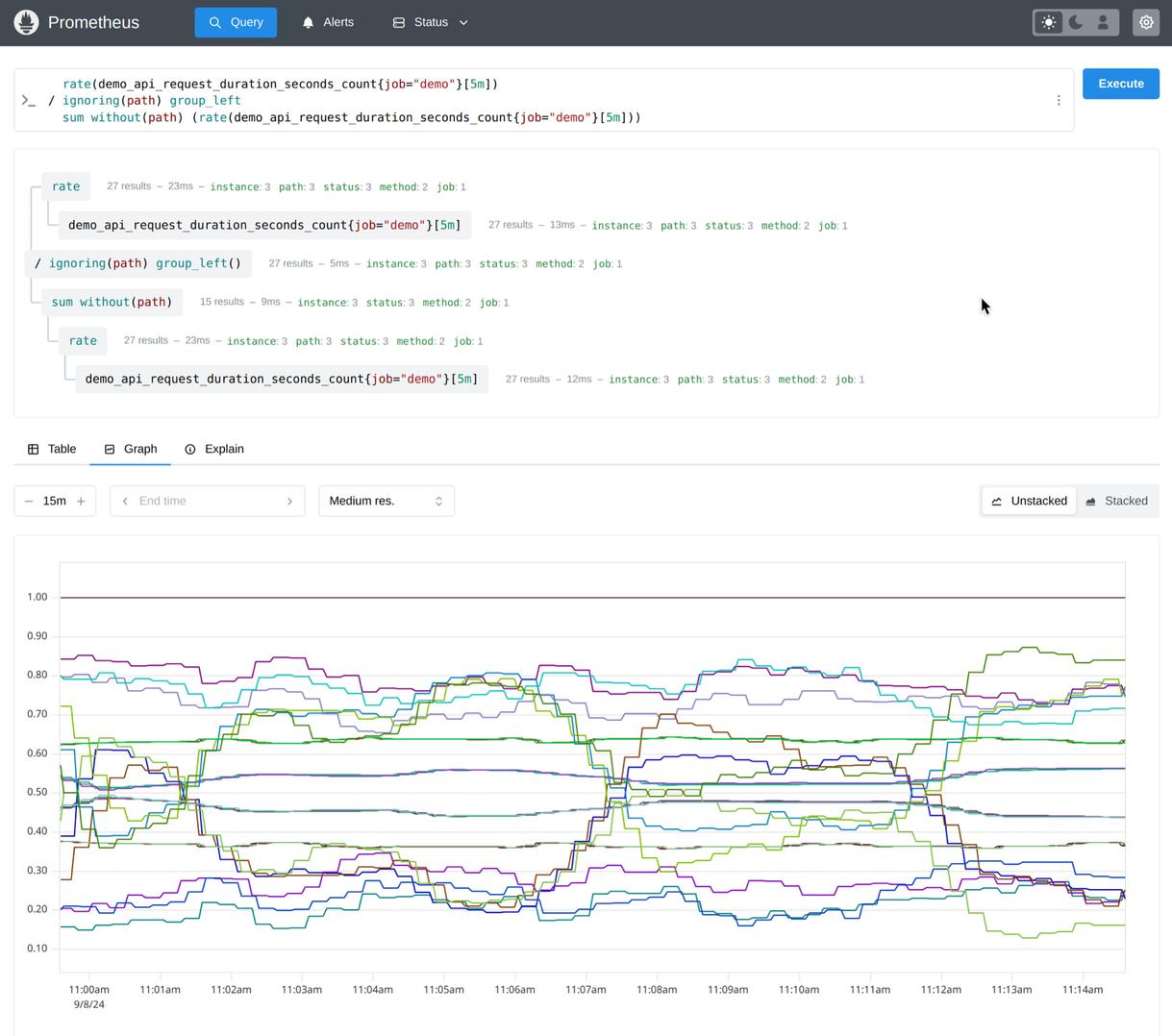
PromQL Query Language
Powerful query language that allows users to slice and dice metrics, create custom alerts, and generate insightful visualizations
Pull-Based Architecture
Prometheus scrapes metrics from targets over HTTP, and the Pushgateway covers short-lived jobs
Built-in Alerting
Alerting rules in Prometheus with Alertmanager for grouping, silencing and routing to email, chat, paging tools and webhooks
Exporters
node_exporter, windows_exporter, blackbox_exporter, SNMP exporter and hundreds of community exporters expose metrics from existing systems
Service Discovery
Finds targets automatically in Kubernetes, cloud providers, Consul, DNS and files
Pros and Cons
Pros
Open Source and Free
Apache-2.0 licensed and free, governed by the CNCF rather than a single vendor
Cloud-Native Design
Built for cloud-native environments with excellent Kubernetes integration and CNCF graduated project status
High Performance and Scalability
A single server handles millions of active time series with efficient local storage
Huge Exporter Ecosystem
Exporters exist for most operating systems, databases, network devices and applications
De Facto Standard Format
The Prometheus exposition format and PromQL are supported by most modern monitoring tools
Cons
Limited Long-term Storage
Local storage is meant for weeks of data; long-term retention needs Thanos, Cortex, Mimir or remote storage
Steep Learning Curve
PromQL and configuration can be complex for newcomers, requiring technical expertise to implement effectively
Limited Built-in Visualization
The built-in UI is for ad hoc queries; dashboards normally come from Grafana
No Multi-Tenancy
A Prometheus server has no tenants or user permissions; MSPs need separate servers or Thanos, Cortex or Mimir
Not Built for Endpoint Fleets
Pull-based scraping needs network reach to each target, which is awkward for laptops and desktops behind NAT
Feature Comparison
Comments
No reviews yet. Be the first to share your experience with Prometheus.
Frequently Asked Questions
/vendor/prometheus