
pfSense
Network Management and Monitoring
Alternative Vendors


Commercial Alternatives


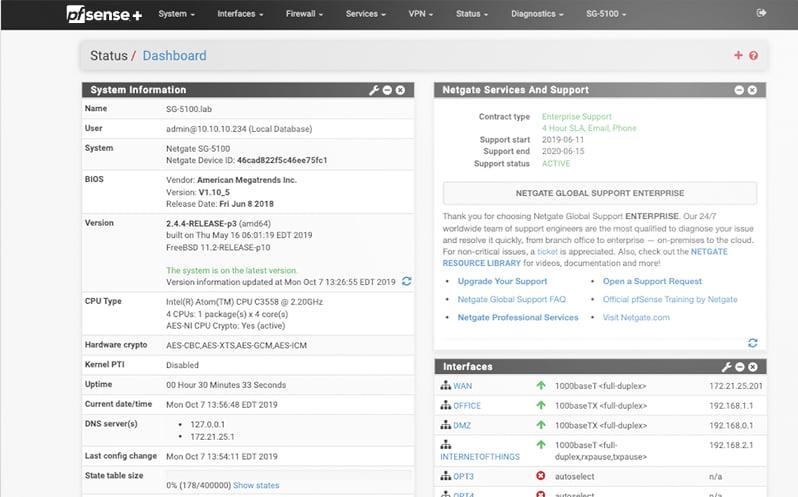
Key Features
Stateful Firewall
Enterprise-grade stateful packet inspection with advanced rule management and granular traffic control
Multiple VPN Protocols
Built-in support for IPsec, OpenVPN, WireGuard, and L2TP VPN with site-to-site and remote access capabilities
Traffic Shaping & QoS
Advanced traffic shaping, quality of service (QoS), and bandwidth management using ALTQ or Limiters
High Availability
CARP-based failover and state synchronization for enterprise-grade redundancy
Multi-WAN Support
Load balancing and failover across multiple WAN connections with automatic gateway monitoring
IDS/IPS Integration
Integration with Snort and Suricata for intrusion detection and prevention capabilities
Pros and Cons
Pros
Open Source & Cost-Free
pfSense CE is free under the Apache 2.0 license, with paid pfSense Plus subscriptions and Netgate support when needed
Feature-Rich Platform
Enterprise-grade features rivaling commercial firewalls including VPN, firewall, routing, HA, and IDS/IPS
Proven Reliability
In use since 2004 by businesses, government agencies and schools, with a large body of community knowledge
Active Development
Regular updates and active development by Netgate with strong community contributions
Hardware Flexibility
Runs on commodity hardware, virtual environments, or purpose-built Netgate appliances
Cons
Learning Curve
Requires networking knowledge to configure properly - not ideal for beginners without firewall experience
GUI Performance
Web interface can be slow on lower-spec hardware, especially with many rules or packages
CE vs Plus Split
Netgate puts new features into pfSense Plus first; CE releases are less frequent and some features are Plus-only
Limited Cloud-Native Features
Not designed for cloud-native environments - better suited for traditional networking
Commercial Use Needs pfSense Plus Licence
Business, production and MSP use of pfSense Plus requires a subscription of $129 to $799 per instance per year
Feature Comparison
Comments
No reviews yet. Be the first to share your experience with pfSense.
Frequently Asked Questions
/vendor/pfsense