Nagios logo

Nagios

Network Management and Monitoring

Open Source
Free Tier
Paid Plans
Self-hosted
OpenMSP Score
92
93
Reddit Impact Score
Github Score
11M
2KStars
480Forks
3KCommits
GNU General Public License v2.0License
Jun 2, 2026Last commit
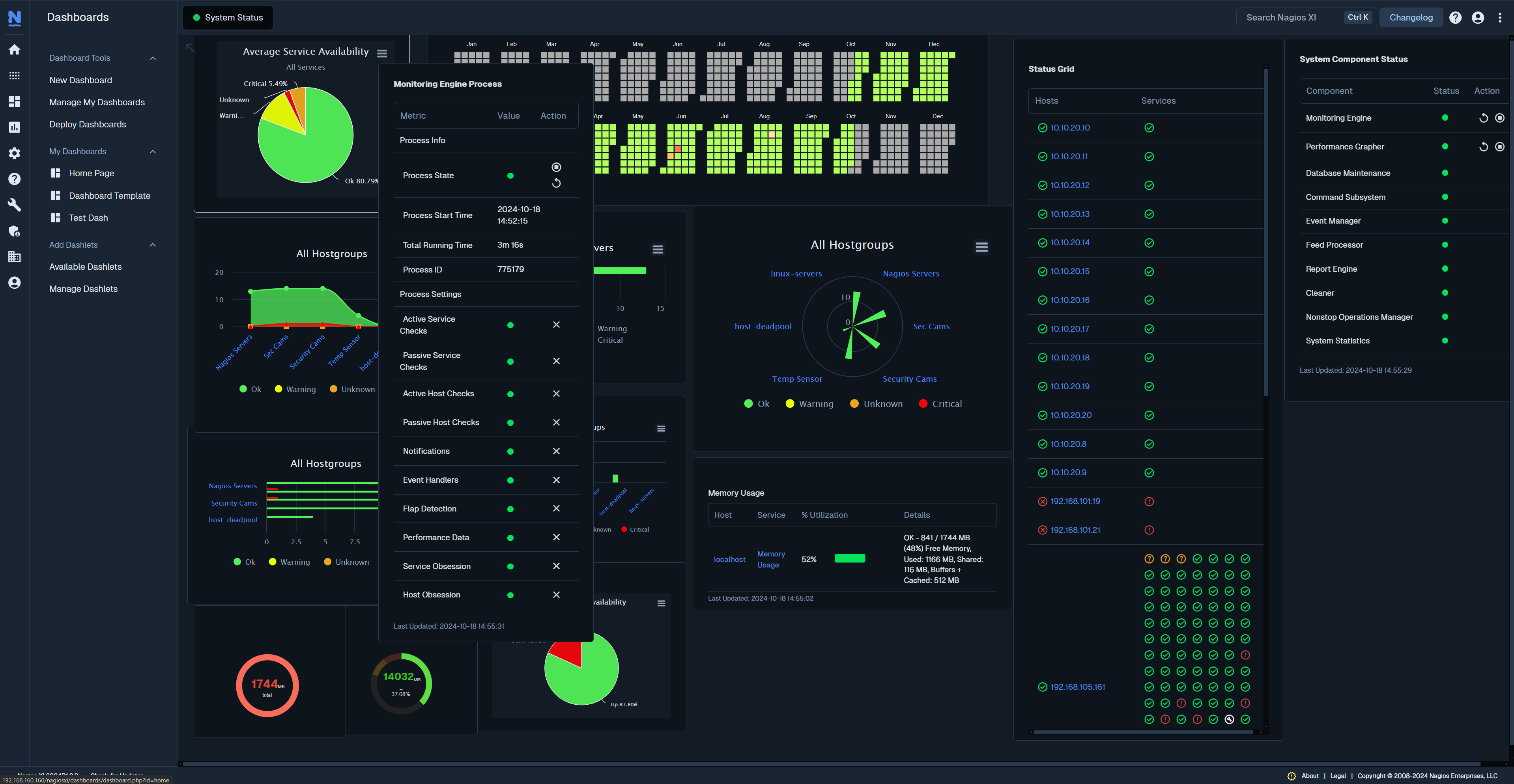
Nagios is an open-source monitoring system that watches hosts and services, alerting users when things go wrong and again when they get better. It offers complete monitoring and alerting for servers, switches, applications, and services with extensive plugin support for custom monitoring needs.
image media
1 / 2

Key Features

Comprehensive Infrastructure Monitoring

Monitor websites, servers, switches, routers, firewalls, applications, services, and system metrics from a single platform with support for custom checks and plugins.

Powerful Alerting and Notifications

Flexible alerting system with email, SMS, Slack, Microsoft Teams notifications, escalation procedures, and dependency-aware alerting to reduce noise.

Extensive Plugin Ecosystem

Thousands of community-built plugins available through Nagios Exchange, with 50+ built-in checks and powerful APIs for creating custom monitoring solutions.

High Performance and Scalability

Efficient monitoring engine capable of handling 15,000-20,000 checks per 5-minute interval with distributed monitoring capabilities for large environments.

Pros and Cons

Pros

Industry Standard and Proven

25+ years of monitoring expertise with millions of downloads, trusted by organizations worldwide as the de facto standard for open-source monitoring.

Completely Free Core Platform

Nagios Core provides full monitoring capabilities at no cost, with no artificial limitations or licensing restrictions for the open-source version.

Highly Customizable and Extensible

Flexible architecture allows complete customization through configuration files, custom scripts, and thousands of available plugins for any monitoring need.

Strong Community and Ecosystem

Large active community with extensive documentation, training resources, and thousands of plugins available through Nagios Exchange.

Cons

Steep Learning Curve

Requires significant technical expertise to configure and customize effectively, with complex configuration files and command-line management.

Limited Modern UI

Nagios Core has a dated web interface, though Nagios XI offers a more modern UI with additional commercial features.

Manual Configuration Required

Most configuration must be done manually through text files, lacking auto-discovery and wizard-based setup found in modern monitoring tools.

Limited Built-in Analytics

Basic reporting capabilities in core version, requiring additional tools or plugins for advanced analytics and trending analysis.

Feature Comparison

Comments

Yuna Takahashi

Yuna Takahashi

Jun 4, 2025

Industry standard monitoring

Nagios handles infrastructure monitoring reliably across client environments. Plugin ecosystem is extensive and alerting system is configurable. Interface feels dated.

Henry CooperCloudOps Partners

Henry CooperCloudOps Partners

Jun 3, 2025

Proven monitoring solution

Using Nagios for network and application monitoring. Performance is consistent and community support is strong. Configuration requires time investment.

Christian BaileyTechForward MSP

Christian BaileyTechForward MSP

Jun 2, 2025

Reliable infrastructure monitoring

Nagios provides solid monitoring capabilities for diverse client infrastructures. Flexibility is excellent but setup complexity can be challenging for new users.

Frequently Asked Questions

Getting Started

OpenMSP is The MSP Knowledge Hub & Community Platform designed specifically for Managed Service Providers seeking to optimize their technology stack, reduce vendor costs, and discover open-source alternatives. We combine a comprehensive vendor directory, open-source solution catalog, and integrated community discussions to help MSPs make informed decisions.
Yes, completely free. Browse vendors and tools, read comparisons, and join community discussions - no cost, no registration required. OpenMSP is community-supported and focused on empowering MSPs to reduce costs and improve operational efficiency through open-source technology.
We help MSPs identify cost-effective alternatives to expensive commercial solutions, provide transparent vendor information, and connect you with proven open-source alternatives. Our platform enables MSPs to make informed decisions about their technology investments.
No account required for browsing vendors, reading comparisons, or accessing community content. Creating a free account with SSO (Microsoft, Google, or Slack) allows you to participate in discussions and save your favorite tools.

Platform Information

OpenMSP is currently community-supported. We focus on providing value to the MSP community first. Any future monetization will keep the core platform free for MSPs while maintaining our independence and commitment to unbiased information.
We focus exclusively on MSP needs with transparent vendor information and open-source alternatives. No vendor partnerships or sponsored listings - just honest, community-driven information to help MSPs make better technology decisions. Our biggest value is our community where MSPs help each other with questions, setup guidance, and sharing real-world experiences.
Our community of MSP professionals helps verify and update information. We also maintain direct research on tools and vendors to ensure accuracy. Community members can report outdated information, and we work to keep everything current.
OpenMSP was founded by Michael Assraf, who has extensive experience in the MSP industry and product leadership. As the former CEO & Founder of Vicarius, Michael grew a startup from $0 to $9M ARR with 500+ customers and deep experience working with MSPs, partners, and fundraising. OpenMSP represents his commitment to empowering the MSP community through better technology decisions and cost optimization.

Open-Source Tools & Alternatives

We assess tools based on active development, community size, documentation quality, production deployments by MSPs, and available support options. Tools must meet strict criteria for reliability and enterprise readiness.
Many open-source projects offer multiple support options including community forums, commercial support from vendors, professional services, and our community discussions where experienced MSPs share implementation guidance.