
Duplicity
Cloud Backup Solutions
Alternative Vendors


Commercial Alternatives


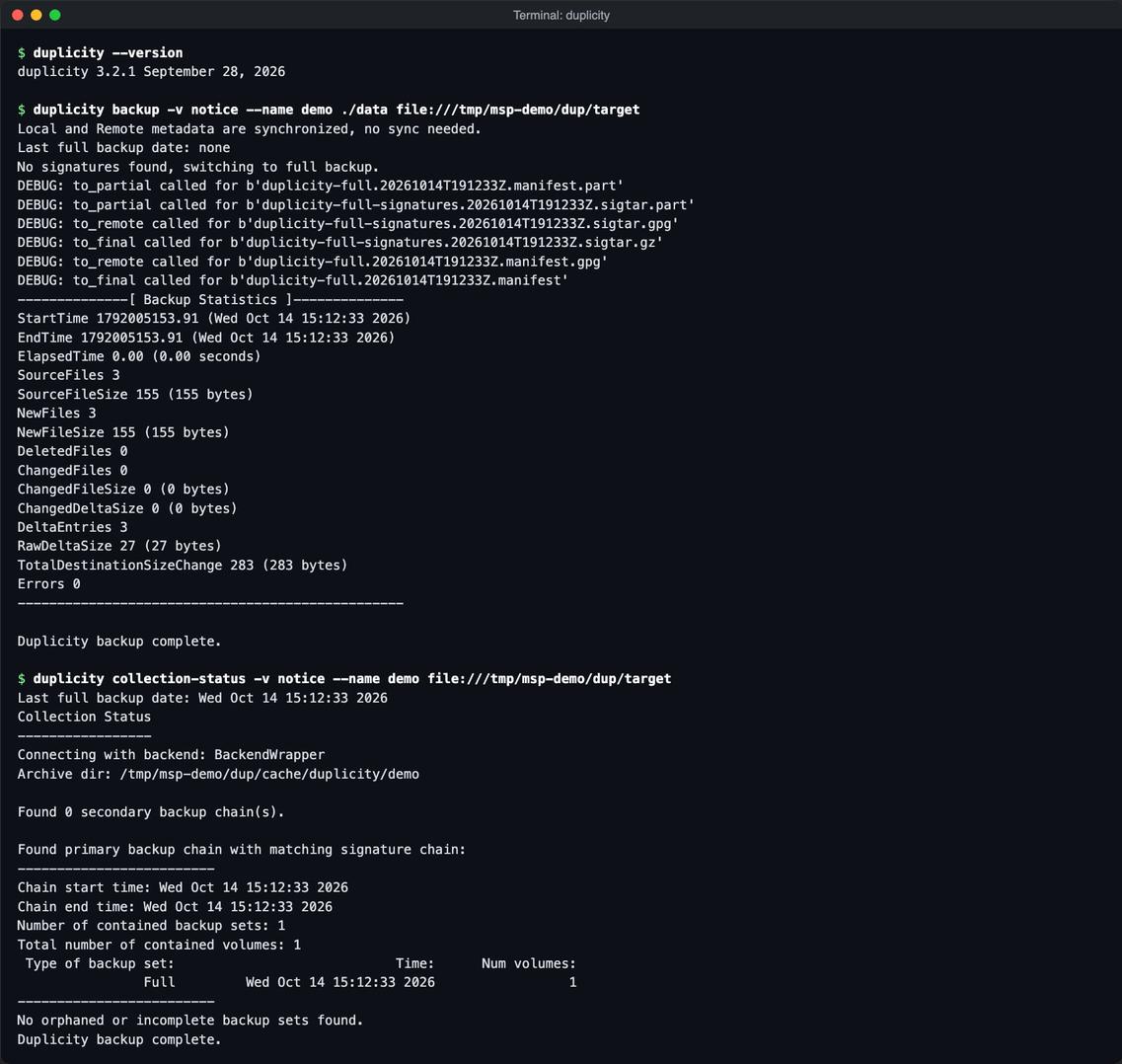
Key Features
Encrypted, signed archives
Backups are encrypted and signed with GnuPG before they leave the machine.
Bandwidth-efficient incrementals
librsync deltas mean incremental backups store only changed parts of files.
Many storage backends
Local disks, SSH/SFTP, FTP, WebDAV, S3 and S3-compatible, B2, GCS, Azure, Dropbox, OneDrive, Google Drive, Swift and rclone.
Standard tar format
Volumes are standard tar archives, which aids long-term recoverability.
Retention commands
remove-older-than and remove-all-but-n-full manage old backup chains.
Script and cron friendly
Command-line design that fits cron jobs, systemd timers and wrapper tools such as duply.
Pros and Cons
Pros
Free and open source
GPL licensed with no paid editions.
Strong encryption
GnuPG encryption and signing by default.
Very broad backend support
Works with almost any cloud storage or remote server.
Efficient incrementals
librsync keeps backup size and upload time low.
Still maintained
Regular releases; 3.2.1 shipped in September 2026.
Cons
Fragile incremental chains
A missing or corrupt volume breaks later incrementals, so regular full backups are required.
Command line and GnuPG setup
Requires managing GnuPG keys and writing scripts.
No native Windows support
Runs on Linux, BSD and macOS; Windows needs WSL or Cygwin.
No deduplication or central console
Less storage-efficient than deduplicating tools and no management UI or commercial support.
Feature Comparison
Comments
No reviews yet. Be the first to share your experience with Duplicity.
Frequently Asked Questions
/vendor/duplicity