Teleport
Identity and Access Management (IAM)
Alternative Vendors


Commercial Alternatives


Key Features
Short-lived certificate access
Issues short-lived certificates for users and machines instead of static SSH keys, passwords or long-lived tokens.
One access layer for all infrastructure
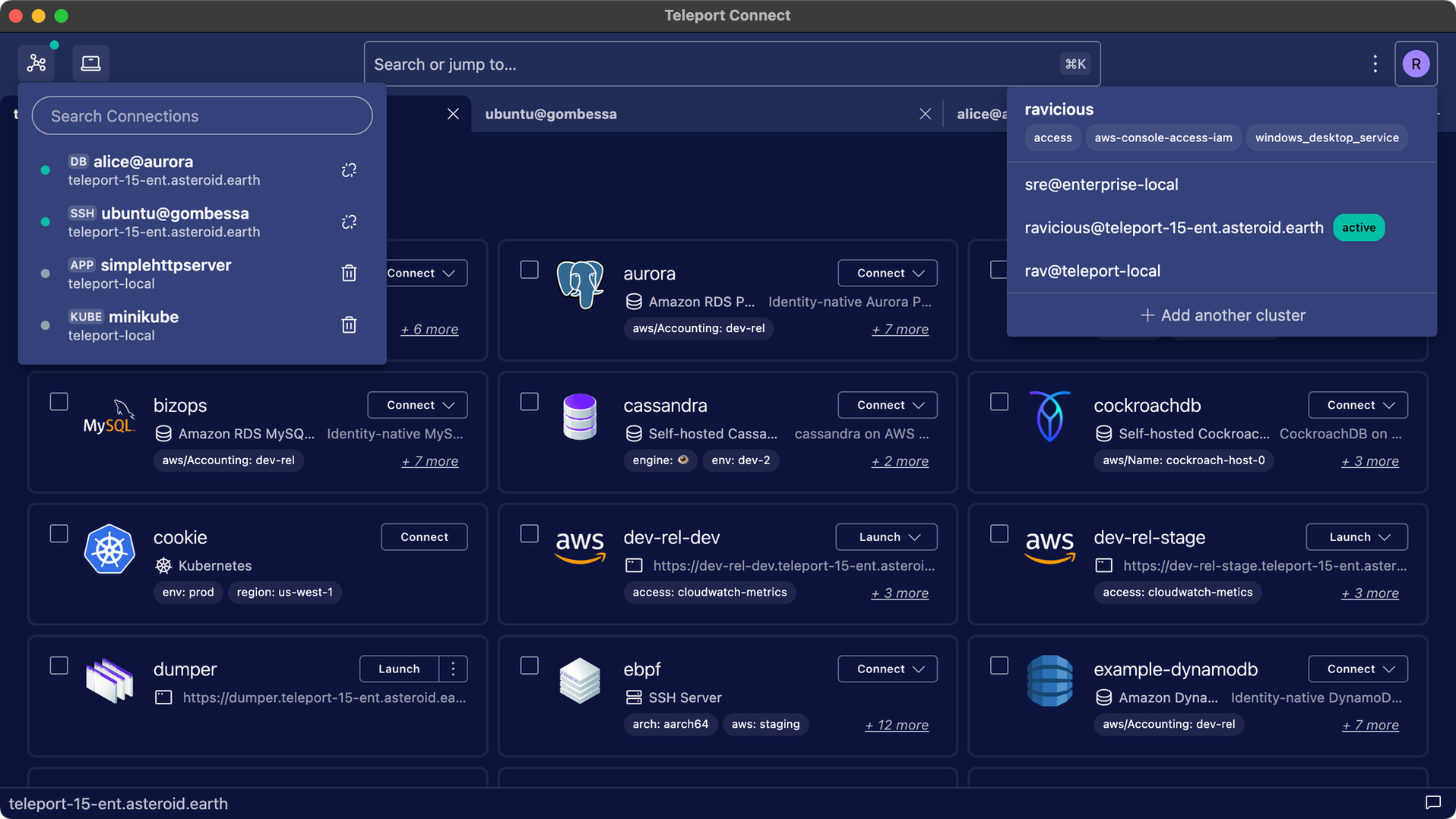
SSH, Kubernetes, databases, web apps, Windows desktops and cloud consoles behind one proxy and policy model.
SSO and strong MFA
SAML, OIDC and GitHub SSO with WebAuthn, passkeys and per-session MFA.
Session recording and audit log
Structured audit events and recordings of SSH, Kubernetes and desktop sessions for compliance.
Just-in-time access requests
Role-based access requests with approval workflows, access lists and periodic access reviews.
Machine and workload identity
Machine ID (tbot) and SPIFFE-compatible workload identity for CI/CD, services and AI agents.
Pros and Cons
Pros
Eliminates static credentials
Short-lived certificates remove shared SSH keys and database passwords.
Covers servers, Kubernetes, databases and desktops
One tool and one policy model instead of separate bastions and VPNs.
Strong audit and session recording
Detailed audit logs and replayable sessions help with SOC 2 and customer audits.
Self-hosted or managed cloud
Enterprise runs on your own infrastructure or as Teleport-managed cloud.
Source code available
The code is published under AGPL-3.0 and can be reviewed and built.
Cons
Community Edition size limits
Free binaries are licensed only to organizations under 100 employees and $10M revenue.
No public Enterprise prices
Enterprise is quote-based, billed on active users and protected resources.
Steep learning curve
Roles, trusted clusters and agents take real effort to design and operate.
Not built around MSP tenancy
Separating many customers means multiple clusters or careful role design.
Feature Comparison
Comments
No reviews yet. Be the first to share your experience with Teleport.
Frequently Asked Questions
/vendor/teleport