
Zitadel
Identity and Access Management (IAM)
Alternative Vendors


Commercial Alternatives


Key Features
Multi-Tenant Architecture
Instances, organizations and projects let one deployment serve many customer organizations, each with its own users, IdPs, branding and policies
Self-Service Capabilities
Complete self-service functionality including user profile management, access control delegation, and business customer configuration
Comprehensive Authentication
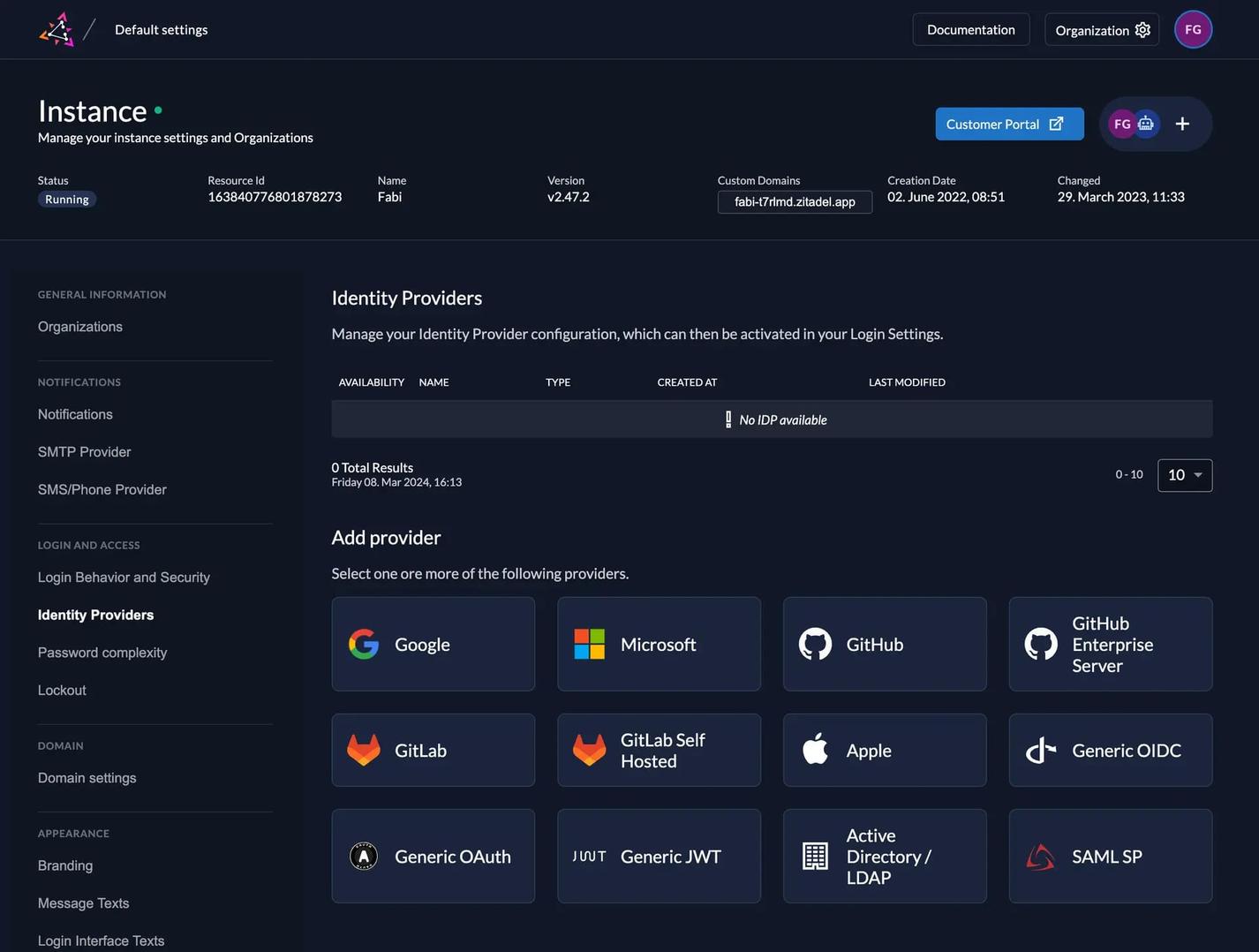
OpenID Connect, OAuth 2.0, SAML 2.0, passkeys and WebAuthn, TOTP, LDAP/AD and social or enterprise identity providers
API-First Design
All functionality is available through gRPC and REST APIs, with SDKs and examples for common languages
Open Source with Cloud and Enterprise Options
AGPL-3.0 open source, available self-hosted or as ZITADEL Cloud, with a commercial license and support in Enterprise
SCIM 2.0 Provisioning
Provision and deprovision users from other systems with SCIM 2.0
Pros and Cons
Pros
Modern Cloud-Native Design
Cloud-native Go service on PostgreSQL, deployable as a single binary, container or on Kubernetes
Strong Multi-Tenancy
Organizations and project grants map well to an MSP giving each customer its own tenant
Developer-Friendly
API-first design with comprehensive SDKs and excellent documentation for rapid integration
Flexible Deployment
Available as cloud service or self-hosted with data ownership options
Comprehensive Self-Service
Rich self-service capabilities beyond basic auth including user management and org configuration
Cons
Relatively New Platform
Founded in 2019; a shorter track record than Okta, Auth0 or Keycloak
Limited Enterprise Features
Some advanced enterprise features may be missing compared to more established solutions
Smaller Ecosystem
Fewer third-party integrations and community resources than larger identity platforms
Learning Curve
Multi-tenant architecture may be complex for simple single-tenant use cases
Pricing Model Complexity
Cloud pricing is based on daily active users, which can be hard to forecast for spiky workloads
Feature Comparison
Comments
No reviews yet. Be the first to share your experience with Zitadel.
Frequently Asked Questions
/vendor/zitadel