Palo Alto Networks Cortex XDR logo

Palo Alto Networks Cortex XDR

Extended Detection and Response (XDR)

Commercial Vendor
E
Enterprise
E
Enterprise
E
Enterprise
OpenMSP Score
54
35
Reddit Impact Score

Alternative Vendors

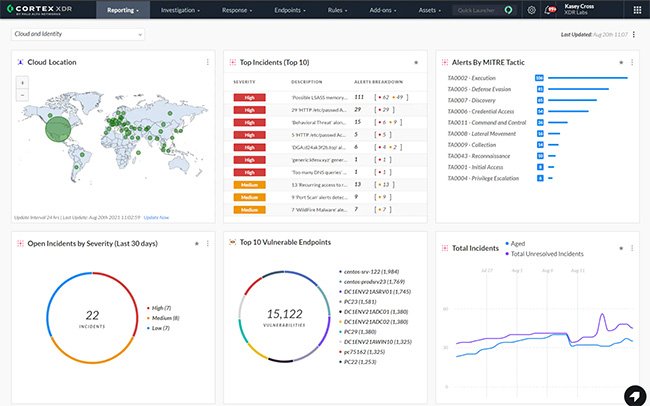
Palo Alto Networks Cortex XDR is a comprehensive extended detection and response platform that integrates endpoint, network, and cloud data to deliver AI-powered threat detection and response. The solution achieved 100% detection in the latest MITRE Evaluations and stops 30.9 billion threats daily using Precision AI technology. Key capabilities include: • Multi-Vector Protection: Unified XDR across endpoints, networks, cloud, and identity sources • AI-Powered Analytics: Behavioral analytics and machine learning for detecting known and unknown threats • Comprehensive Endpoint Security: Protection against malware, ransomware, fileless attacks, and zero-day exploits • Cloud Detection & Response (CDR): Best-in-class cloud security for multicloud organizations • Investigation & Response: Automated threat hunting with execution path analysis and native automation • Device Control: Agentless USB and device access monitoring with granular policy enforcement • Integration Ecosystem: Seamless integration with Palo Alto Networks security portfolio and third-party tools • Real-Time Threat Prevention: Continuous monitoring with 24/7 managed detection and response options Cortex XDR offers two main editions: Cortex XDR Prevent (endpoint-focused) and Cortex XDR Pro (comprehensive coverage including network and cloud). The platform features centralized management through the Cortex Data Lake, advanced analytics engine, and tight integration with Palo Alto Networks next-generation firewalls. Organizations report significant improvements in threat detection, with some seeing 99.6% reduction in open alerts and 5x increase in security productivity.
image media
1 / 2

Key Features

AI-driven attack detection and prevention

Advanced machine learning models analyze endpoint, network, and cloud data to detect sophisticated attacks including zero-day exploits, with behavioral analysis preventing threats before they cause damage.

Integrated endpoint protection and response

Combines next-generation antivirus, endpoint detection and response, and managed threat hunting in a single agent, reducing complexity while providing comprehensive endpoint security coverage.

Network traffic analysis and lateral movement detection

Analyzes network communications to identify suspicious lateral movement, data exfiltration attempts, and command-and-control communications, providing visibility into attack progression across infrastructure.

Cloud workload protection and container security

Extends security monitoring to cloud environments including AWS, Azure, and Google Cloud, with specialized protection for containerized applications and serverless computing environments.

Automated incident response and orchestration

Configurable playbooks automate response actions including isolation, remediation, and containment, while providing security teams with guided investigation workflows and recommended response actions.

Threat intelligence integration with Unit 42 research

Leverages Palo Alto Networks Unit 42 threat intelligence team research and global threat data to provide context for security events and proactive protection against emerging threats.

Pros and Cons

Pros

AI-powered analytics

Advanced AI and machine learning capabilities

Comprehensive coverage

Covers endpoints, networks, and cloud environments

Automated response

Strong automated investigation and response

Threat intelligence

Integration with Palo Alto threat intelligence

Scalability

Highly scalable for enterprise environments

Cons

Cost

Premium pricing compared to alternatives

Complexity

Complex deployment and management

Resource requirements

Significant resources required for full deployment

Learning curve

Steep learning curve for new users

Feature Comparison

Comments

No Comments Yet

Be the first to share your experience with Palo Alto Networks Cortex XDR.

Frequently Asked Questions

Getting Started

OpenMSP is The MSP Knowledge Hub & Community Platform designed specifically for Managed Service Providers seeking to optimize their technology stack, reduce vendor costs, and discover open-source alternatives. We combine a comprehensive vendor directory, open-source solution catalog, and integrated community discussions to help MSPs make informed decisions.
Yes, completely free. Browse vendors and tools, read comparisons, and join community discussions - no cost, no registration required. OpenMSP is community-supported and focused on empowering MSPs to reduce costs and improve operational efficiency through open-source technology.
We help MSPs identify cost-effective alternatives to expensive commercial solutions, provide transparent vendor information, and connect you with proven open-source alternatives. Our platform enables MSPs to make informed decisions about their technology investments.
No account required for browsing vendors, reading comparisons, or accessing community content. Creating a free account with SSO (Microsoft, Google, or Slack) allows you to participate in discussions and save your favorite tools.

Platform Information

OpenMSP is currently community-supported. We focus on providing value to the MSP community first. Any future monetization will keep the core platform free for MSPs while maintaining our independence and commitment to unbiased information.
We focus exclusively on MSP needs with transparent vendor information and open-source alternatives. No vendor partnerships or sponsored listings - just honest, community-driven information to help MSPs make better technology decisions. Our biggest value is our community where MSPs help each other with questions, setup guidance, and sharing real-world experiences.
Our community of MSP professionals helps verify and update information. We also maintain direct research on tools and vendors to ensure accuracy. Community members can report outdated information, and we work to keep everything current.
OpenMSP was founded by Michael Assraf, who has extensive experience in the MSP industry and product leadership. As the former CEO & Founder of Vicarius, Michael grew a startup from $0 to $9M ARR with 500+ customers and deep experience working with MSPs, partners, and fundraising. OpenMSP represents his commitment to empowering the MSP community through better technology decisions and cost optimization.

Open-Source Tools & Alternatives

We assess tools based on active development, community size, documentation quality, production deployments by MSPs, and available support options. Tools must meet strict criteria for reliability and enterprise readiness.
Many open-source projects offer multiple support options including community forums, commercial support from vendors, professional services, and our community discussions where experienced MSPs share implementation guidance.