
Fleet MDM
Mobile Device Management


Commercial Alternatives


Key Features
Osquery-based visibility
Built on osquery, so device state can be queried with SQL for inventory, compliance checks and investigations
Live queries across hosts
Run ad-hoc SQL queries across hosts to investigate incidents, verify configuration or gather inventory
Role-based access control
Role-based access and fleets (formerly teams) separate groups of hosts and who can manage them
GitOps device management
Manage profiles, policies, scripts and software as code in Git, with review and automated rollout
Apple MDM
Manages macOS, iOS and iPadOS with configuration profiles, Declarative Device Management OS updates, VPP apps and zero-touch enrollment through Apple Business Manager
Windows, Linux, ChromeOS and Android management
Windows MDM with Autopilot, Linux and ChromeOS management, and Android fully managed and work-profile enrollment
Pros and Cons
Pros
Cross-platform
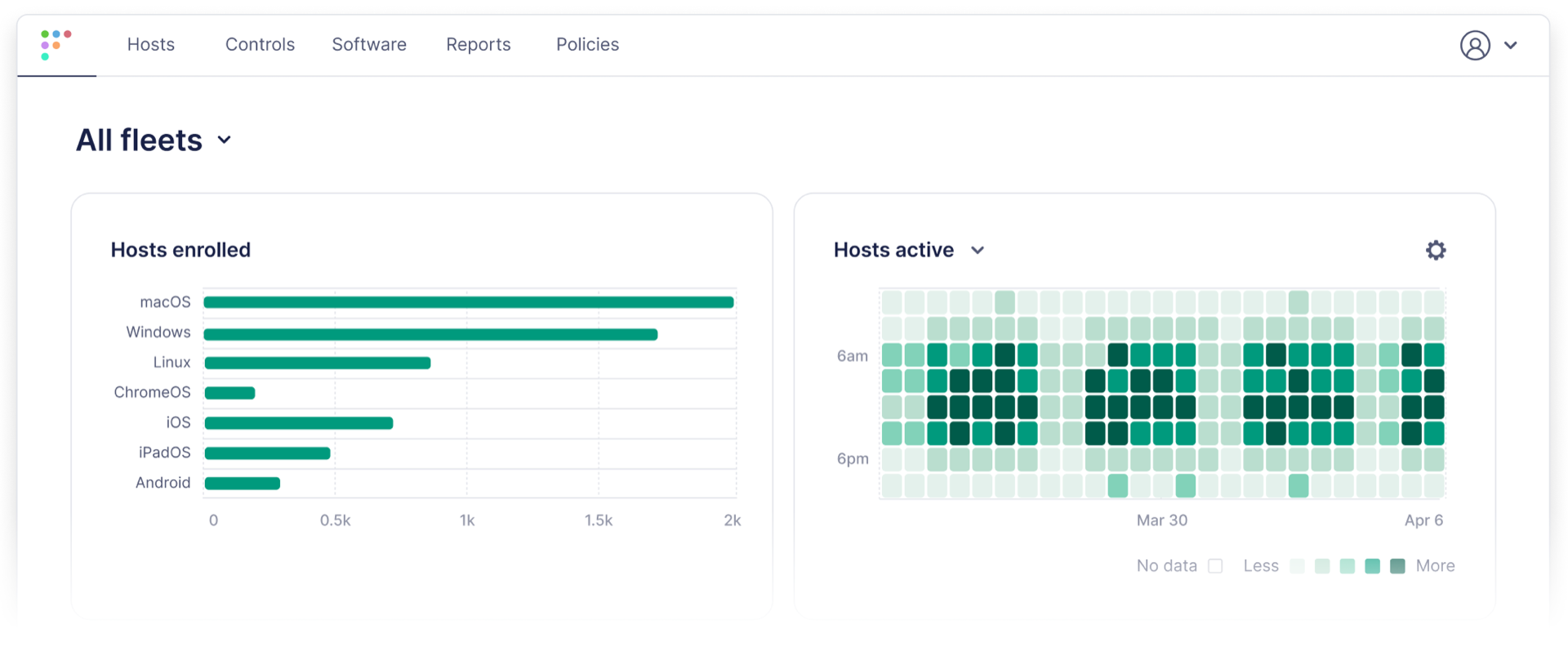
One console for macOS, Windows, Linux, ChromeOS, iOS, iPadOS and Android
Open core
Most code is MIT licensed and developed in public; the free tier has no host limit
Osquery integration
osquery gives deep, queryable device data beyond what typical MDM inventory shows
Security focus
Vulnerability detection, CIS policies and live queries support security and compliance work
API and GitOps
REST API, CLI and GitOps make Fleet easy to automate and integrate
Cons
UI simplicity
Less polished UI than commercial alternatives
Premium features are commercial
Premium features live under a commercial license in ee/ and cost $7 per host per month; the free tier has no support
Setup complexity
Self-hosting needs MySQL, Redis and the Fleet server, plus Apple and Windows MDM certificates and enrollment setup
Managed cloud has a minimum
Fleet-hosted cloud is only offered to customers with 700+ hosts, so small MSPs must self-host or use a third-party host
Feature Comparison
Comments
No reviews yet. Be the first to share your experience with Fleet MDM.
Frequently Asked Questions
/vendor/fleet-mdm