
Osquery
Endpoint Security (Antivirus/EPP)
Alternative Vendors


Key Features
SQL-based OS queries
Exposes operating system information as a relational database queryable with SQL, making system interrogation accessible to analysts.
Real-time monitoring events
Event-based tables capture system changes in real-time including file modifications, process launches, and network connections.
File integrity monitoring
The file_events table and FIM settings watch chosen paths and record hashes and attributes when files change.
Cross-platform support
The same SQL schema on Linux, macOS and Windows, so one query works across a mixed fleet.
System resource tables
Tables expose CPU, memory, disk and process resource usage for troubleshooting and baselining.
Query packs
Packs group scheduled queries for use cases such as incident response, compliance and vulnerability checks.
Pros and Cons
Pros
SQL interface
Any administrator who knows SQL can question endpoints without learning a new query language.
Integration friendly
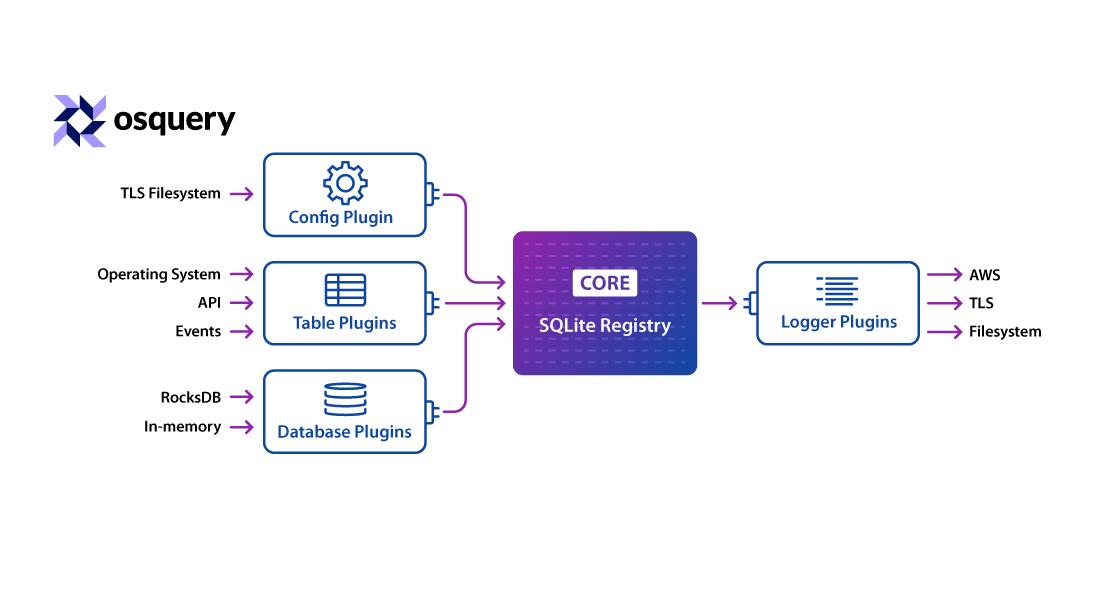
Logger plugins send results to files, TLS endpoints, Kafka or AWS Kinesis, and many SIEMs and fleet managers support osquery.
Open source
Dual-licensed under Apache 2.0 and GPL 2.0 and maintained under the Linux Foundation with regular releases.
Cross-platform
One agent and schema for Linux, macOS and Windows.
Low footprint
Lightweight daemon with a watchdog that limits its CPU and memory use.
Cons
Query expertise
Requires SQL and system knowledge
Not a complete EDR
Collects visibility data but does not block threats or include detection content; it is not an EDR.
Limited response
Read-only by design; it cannot kill processes or isolate hosts.
Needs a fleet manager
No central console or multi-tenant management; MSPs need Fleet, a SIEM or an RMM integration to run it across clients.
No user interface
The project ships only a command-line shell and daemon; dashboards and alerting come from other tools.
Feature Comparison
Comments
No reviews yet. Be the first to share your experience with Osquery.
Frequently Asked Questions
/vendor/osquery