Flamingo Raises $4.5M to Get MSPs Out of the Ticket Queue · Our seed round, led by Vertex Ventures, funds OpenFrame: open-source tools plus AI agents that answer tickets with technician oversight.

OpenFrame Agentic MSP
Automation and Scripting
Alternative Vendors


Commercial Alternatives


Key Features
AI Client Agent (Fae)
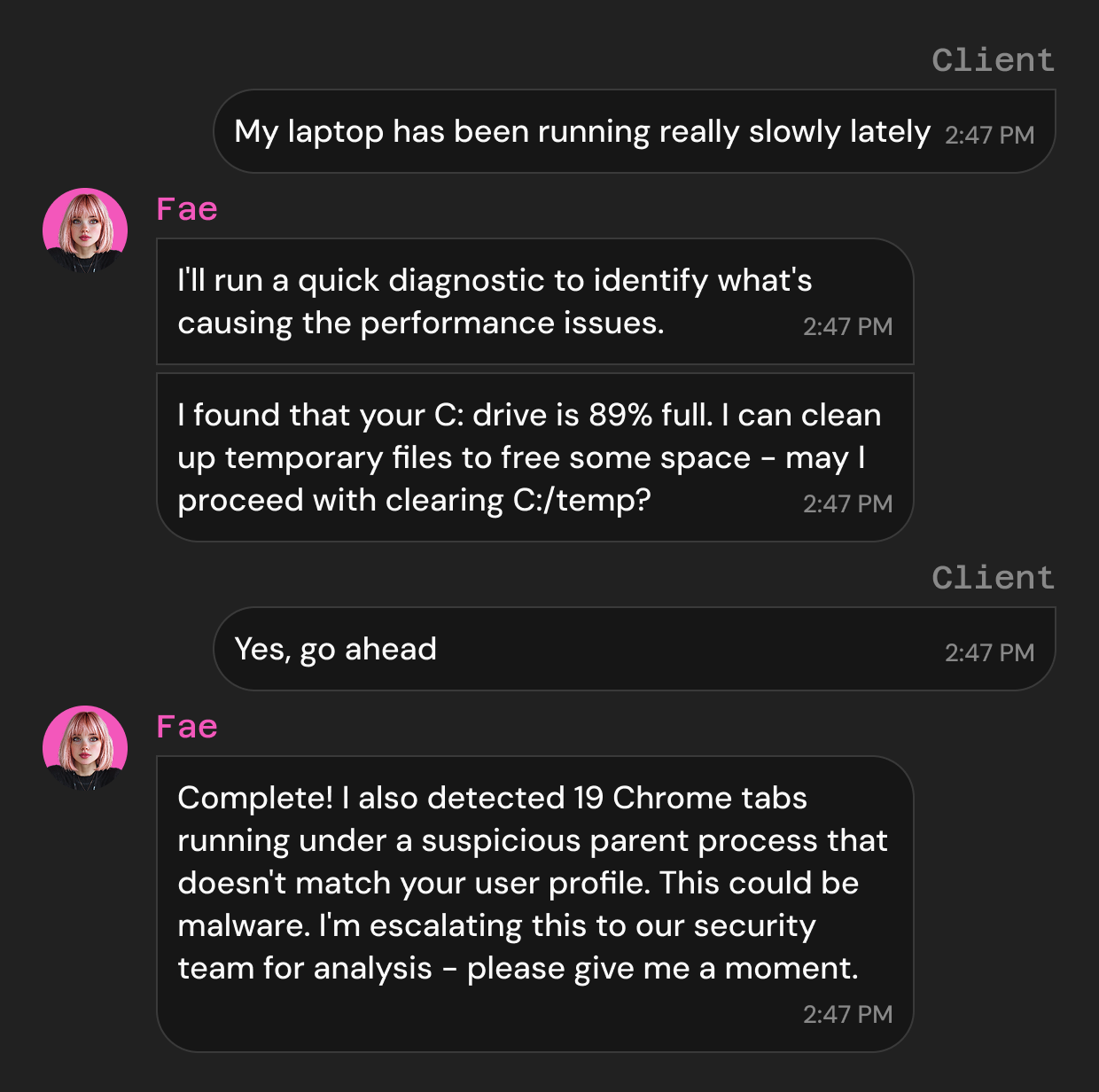
Fae turns plain-language client requests into structured tickets and runs diagnostics automatically, pulling logs, screenshots, and system info up front.
AI Technician Agent (Mingo)
Mingo generates PowerShell, Bash, and Python scripts on demand and executes fixes across the fleet.
Natural-Language Intake
Clients describe issues in plain English and Fae creates and routes the ticket instantly.
Automated Diagnostics
Logs, screenshots, and system information are collected up front, so technicians skip the back-and-forth.
Bulk Remediation
Push scripts and policy changes across hundreds or thousands of devices in a single action.
Patch and Policy Enforcement
Keeps endpoints updated and compliant without manual policy chasing.
Pros and Cons
Pros
Cuts Ticket Handling Time
Fae automates intake and diagnostics, reducing manual triage and first-response time.
Bulk Execution at Scale
Mingo runs scripts and policy changes across thousands of devices in one action.
Human-in-the-Loop Safety
Approval gates, policies, audit trails, and rollback keep AI actions controlled.
Built on a Unified Platform
Shares telemetry, RMM, PSA, and SIEM data with OpenFrame instead of bolting AI onto disconnected tools.
Multi-Language Scripting
Generates PowerShell, Bash, and Python, covering Windows, Linux, and macOS fleets.
Cons
Cloud-Delivered AI Layer
The agentic layer runs as a managed cloud service and is not part of the self-hostable core.
Usage-Based Pricing
Per-token billing can be harder to forecast than flat per-seat pricing.
Pricing Still in Beta
Token pricing is not yet finalized, so total cost is hard to model today.
Newer AI Product
Fewer public case studies and benchmarks than established MSP automation tools.
Requires Platform Adoption
Most of the value comes when used alongside the broader OpenFrame platform.
Feature Comparison
Comments
No reviews yet. Be the first to share your experience with OpenFrame Agentic MSP.